This week on Science Stories with Joe Johnson, our resident science guy highlighted three fascinating developments—from NASA’s Mars rover discoveries, to evolving cheese molds, to a spectacular lineup in the night sky.
NASA’s Perseverance Rover Finds Possible Biosignatures on Mars
Big news came out of the September 10th issue of Nature and a NASA press conference this week. The Perseverance rover, which has been exploring Mars since 2021, has made intriguing findings in Jezero Crater—an area believed to have once been a lake about 28 miles across and up to 100 feet deep.
The rover is now studying the Bright Angel Formation, a site of fine-grained, light-colored mudstone. Early analysis revealed organic carbon, the type that forms bonds typical in living systems. Using a powerful microscope, NASA scientists observed tiny nodules nicknamed “poppy seeds.”
Tests with an X-ray fluorescence spectrometer showed these nodules contain iron, phosphorus, zinc, and phosphate minerals. On Earth, such structures can form either from high-temperature chemical reactions or as byproducts of microbial activity.
“This is not proof of life,” Johnson emphasized, “but it’s a possible biosignature worth studying.”
Samples collected by Perseverance may eventually be returned to Earth for deeper analysis. So far, the rover has secured about 30 samples with six collection tubes still empty.
Cheese Mold Evolution in Vermont
Closer to home, scientists from Tufts University studied microbial changes at Jasper Hill Farm in Vermont, known for its Bailey Hazen Blue cheese.
Originally, the cheese rind grew green mold from the Penicillium genus. But when researchers returned years later, the rind had turned white. DNA sequencing revealed that a mutation disrupted a key gene, ALB1, which normally drives melanin production.
Without the pigment, the mold stopped expending energy on coloration—giving the white variant an advantage in dark cheese-aging caves. Interestingly, the green strain still outperforms the white in light.
“This is evolution in action,” Johnson explained, comparing it to cave-dwelling creatures that lose pigmentation or eyesight when no longer needed. Beyond food science, the finding could offer insights into microbial adaptation and potential applications in biotechnology.
A Parade of Planets in the Sky
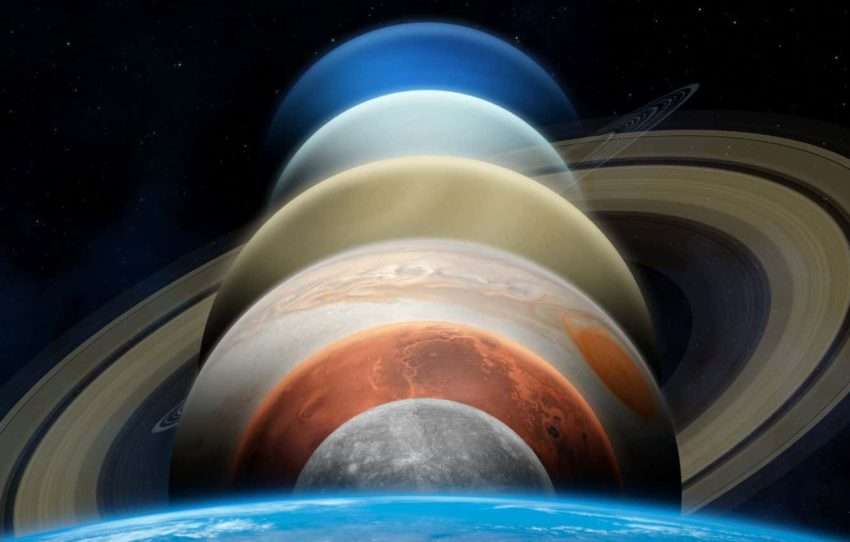
Finally, stargazers have a show to look forward to this week. Early risers will be able to see Venus low on the eastern horizon just before dawn, with Jupiter high above and the waning crescent moon moving between them. On September 19, the moon and Venus will appear in a close conjunction alongside the star Regulus.
Meanwhile, Saturn reaches opposition on September 21, meaning it will shine at its brightest this year. Uniquely, Saturn’s rings will appear nearly invisible from Earth because they are edge-on—making this a rare chance to see the planet without its iconic bands.
“Don’t worry about telescopes or binoculars,” Johnson said. “These sights will be visible to the naked eye.”
The weekend also brings the new moon on September 21, followed by the autumnal equinox on September 22, marking the official start of fall.
Image Credit: iStock