
This story originally appeared in New York Focus, a nonprofit news publication investigating power in New York. Sign up for their newsletter here.
CRIMINAL JUSTICE · September 16, 2025
ICE Detentions in New York County Jails Have Exploded
So far this year, the state’s county jails have held six times more people for federal immigration authorities than they did in all of 2024.
By Julia Rock and Isabelle Taft , New York Focus
Several New York county jails quietly joined the Trump administration’s rapidly growing immigration detention network this spring.
Seven jails booked a total of nearly 2,800 people arrested for immigration reasons and detained by US Immigration and Customs Enforcement in the first seven months of 2025, up from only 500 booked in New York jails all of last year, according to ICE data — a nearly sixfold increase.
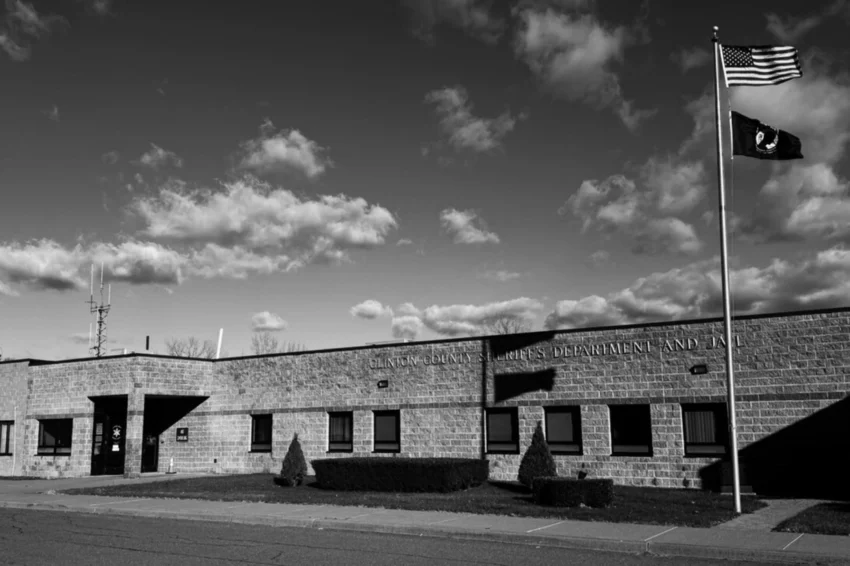
In recent years, two jails, in Orange and Clinton counties, consistently held federal immigration detainees. But since February, Allegany, Broome, Montgomery, Nassau, and Niagara counties have joined them.
As ICE ramped up immigration arrests in workplaces, courthouses, and on the streets, and instituted a policy mandating detention during deportation proceedings, the agency sought space to detain the growing numbers of people it was arresting.
County jails are some of the agency’s only options in New York. Private detention centers, which ICE relies on elsewhere in the country, are illegal in the state, and the state’s only ICE detention facility, near Buffalo, has often been near or even over capacity this year.
ICE will pay participating counties millions of dollars in total this year to detain people the agency is seeking to deport.
Some county officials view the arrangements as part of their broader support for President Donald Trump’s immigration agenda. “It makes for a safer county to allow ICE to use our jail cells,” Nassau County Executive Bruce Blakeman, a vocal Trump ally, said at a July press conference.
Over half of the ICE detainees held in New York jails between January and July — and 62 percent in Nassau County — had no criminal charges or conviction, the federal data shows.
The jails’ immigration detention agreements have sparked backlash from some residents and local legislators who don’t want their counties involved in Trump’s deportation dragnet.
“We are putting people who have allegedly committed civil offenses in jail. That’s what’s wrong with this equation,” said Niagara County legislator Carla Speranza.
Jails across New York have long cycled in and out of ICE’s detention network. Under President Barack Obama, more than 20 jails participated, together holding an average of 140–170 ICE detainees a day during most of his presidency.
New York Focus reviewed ICE booking data obtained by the Deportation Data Project through Freedom of Information Act requests. The dataset shows ICE detentions through late July. New York Focus also reviewed data published by the Vera Institute of Justice showing the daily population of ICE detainees at each facility across the country, including county jails, from October 1, 2008, through June 10, 2025.
Fewer jails participated during Trump’s first term, but more people — more than 200 a day on average — were in them.
During President Joe Biden’s term, only Clinton County, at the Canadian border, and Orange County, in the Hudson Valley, consistently held ICE detainees. In 2024, Orange County booked 324 people, and Clinton County 138. Long Island’s Nassau County booked just 29.
Since the start of Trump’s second term, the network — and the number of people moving through it — has grown substantially. Nassau saw the most dramatic uptick, taking in 1,427 people on behalf of ICE between January and the end of July, more than any other county. Orange County jailed 666 people, and the five other facilities booked 685 people combined.
How long ICE detainees stay in the jails varies widely. In Orange County, the average length of stay is 33 days. In others, including Nassau, it’s as short as two days.
Many detainees were arrested nearby and eventually taken to different detention facilities. In rare cases, they were released on bond or deported, ICE data shows. People arrested by ICE in New York often eventually end up in detention facilities in southern states like Texas or Louisiana, according to interviews with five immigration attorneys.
The jails are holding people under county agreements with federal agencies. Some have detention contracts with ICE. Others are taking ICE detainees under longstanding agreements with the US Marshals Service, the federal law enforcement agency, that have provisions allowing ICE to use the jail space. Both types of agreements typically require the jails to guarantee that they will keep a certain number of beds available for ICE or US Marshals detainees.
Montgomery County Sheriff Jeffery Smith, a Republican, said his county’s contract with the Marshals Service dates back to the 1990s, when the Marshals paid to help build a new jail. But ICE generally hasn’t used it to hold people there until this year, according to data published by the Vera Institute of Justice. Smith said the agency typically calls and asks if the jail has a bed open, and says they’ll be bringing someone in if so. The jail staff don’t know why each person was detained, he added.
“We feel we’re doing the right thing in giving all of these incarcerated individuals a safe place to be until they reach their final destination,” Smith said.
The detention contracts are separate from so-called 287(g) agreements, which deputize local officers to assist with federal immigration enforcement. (Broome, Nassau, and Niagara counties also entered 287(g) agreements this year.)
In exchange for detention capacity, the jails receive payments that help them cover staff salaries and other expenses. ICE pays Allegany County $95 per person per day, according to invoices obtained by New York Focus, while Nassau gets $195, county officials told local media.
Orange County has historically brought in millions of dollars annually by holding ICE detainees, helping cover total jail costs of about $78 million this fiscal year, according to the county budget. Across the rest of the state, the money generally makes up a relatively small portion of jail budgets. Invoices obtained through a records request showed that Allegany County billed ICE about $115,000 from February through July, while it cost about $12 million to run the jail last year, according to the county treasurer. The funding share was also small in other counties New York Focus examined.
To estimate how much cash holding ICE detainees brought into county jails, New York Focus analyzed data on the number of ICE detainees and their average length of stay. We also located the per diem rate ICE pays each county jail. We obtained invoices Allegany and Clinton counties sent to ICE for housing the agency’s detainees, showing the revenue they receive through this arrangement. For the other counties, we multiplied the number of ICE detainees at each jail by their average length of stay to estimate the number of times the county charged ICE the per diem rate.
County and jail officials still tend to welcome the revenue. In this year’s Broome County budget, the second item on the sheriff’s list of objectives for the corrections division was using available beds “to generate revenue by housing prisoners for the U.S. Marshals Service, U.S. Immigration and Customs Enforcement and other New York counties.”
“Sheriffs live within a budget, and it’s up to them to fit their expenses into that budget,” said Thomas Mitchell, counsel to the New York Sheriffs’ Association. “Sheriffs might view the contracts with ICE as a way to earn some revenue for the county and maintain jobs for officers.”
In Clinton County, the revenue the jail collects from holding people for ICE and the US Marshals has allowed the county to avoid raising taxes to cover the sheriff’s budget, claimed Robert Hall, a Democrat in the county legislature.
An ongoing crisis in New York’s prisons has made federal money especially enticing for county jails. A three-week wildcat strike launched by state prison guards in February ended after the prison system fired about 2,000 officers for defying a return-to-work order, leaving the state’s prisons understaffed. As a result, county jails have had to hold people sentenced to state prison time, which sheriffs say is costly.
Niagara County Sheriff Mike Filicetti told county legislators that accepting ICE detainees has helped cover overtime costs for corrections officers, which he said went up when the county had to hold more state prisoners, according to Speranza, the Niagara county legislator. Filicetti did not respond to requests for comment.
Some residents oppose the use of detention agreements to generate revenue for the county. Holding people in jail “who have committed no crime, that’s not acceptable,” said Jim Shultz, an activist with Stand Up Lockport in Niagara County.
“They’re just doing it for the money,” he said. “Well, what else is the county jail going to get used for just for money?”
In April, protesters crowded a public safety town hall held by Broome County Sheriff Fred Akshar and yelled at him to “stop stalling” and answer questions about ICE. The confrontation prompted Akshar, a Republican, to release a “Just the Facts” Q&A document saying the ICE detentions were a continuation of longstanding practice housing federal detainees.
County legislators, who typically set the budget for their local sheriffs’ departments, have limited control over the departments’ relationships with federal immigration authorities. To protest ICE detentions in Broome County, Democratic county legislator Mary Kaminsky resigned from an advisory group to the sheriff. She didn’t see much other way to publicly register her opposition.
“We have oversight of his budget, period,” she said. “We don’t have oversight of his policy and procedure.”
Kaminsky said Akshar told legislators that by holding ICE detainees, he was “doing his part in the global effort of public safety,” she recalled. He told them ICE detainees have access to “lawyers, phone calls, all of that,” while in the jail.
Broome County advocates who make visits to the jail are skeptical.
The jail doesn’t have translators on site to help officers and nurses communicate with detainees who don’t speak English, said Joshua Vaughn, who until earlier this month was incarcerated there.
“The immigrants aren’t getting, like, a Spanish rulebook, so they don’t even know the rules,” he said.
Akshar did not respond to requests for comment.
County jails can also make detention harder to navigate for families and attorneys. Matthew Geiling, an immigration attorney, said it’s tougher to locate people when they’re held in county jails than at ICE’s facility in Batavia. Another attorney, who asked not to be named because her employer doesn’t authorize her to speak to the press, said that, in her experience, jails sometimes fail to set up calls with lawyers or video hearings, leading clients to miss court dates.
Smith, the Montgomery County sheriff, was the only jail official who spoke to New York Focus about holding ICE detainees. None of the other county jails mentioned in this story responded to requests for comment.
Some county lawmakers did not learn about the ICE detentions until months after they began — or until New York Focus contacted them.
That includes Montgomery County legislator Maria Kowalczyk, a Democrat, who said she was not aware the jail was housing people for ICE until New York Focus reached out to her for comment.
“If these are documented immigrants, I don’t think that’s right at all,” she told New York Focus. “If they’re undocumented immigrants, I don’t know if detaining them is the proper way to deal with them. I think there’s more respectable and humane ways to do it.”
The Niagara County jail started holding ICE detainees in mid-April, but Speranza, the county legislator, didn’t realize it was happening until June.
“I was at a picnic and a couple of people approached me about it,” Speranza said, referring to activists from Stand Up Lockport. Activists with that group sent a letter to the sheriff expressing concerns about his agreement with ICE.
Still, she said, the legislature “empowers our sheriff … to make decisions he feels are best for operating his department.”
“The sheriff is running that program,” said Jeffrey Elder, another Democratic Niagara County legislator, who sits on the chamber’s public safety committee. “They’re just paid a certain amount to house the people. There’s nothing going on that’s bad or anything like that.”
Progressive state lawmakers have been trying to end ICE detention agreements in the state for years. In 2021, legislators introduced a bill that would prohibit New York jails and other state and local facilities from entering into immigration detention contracts and require them to terminate existing ones. The bill has never passed either chamber of the legislature.
Even under the status quo, counties are operating in murky legal territory.
In 2018, a state court ruled that sheriffs in New York can’t honor so-called ICE detainers — requests by the agency that jails hold people past the end of their sentence until ICE can pick them up.
That’s stopped at least one sheriff from participating in ICE detention. Last September, citing “legal opinions and judicial rulings,” Cayuga County Sheriff Brian Schenck amended his contract with the US Marshals so that ICE can’t use the agreement to hold people at his jail, according to a letter obtained by New York Focus through a public records request.
Schenck said his office wants to work with ICE when it can, but he has been advised that the 2018 ruling means he can’t detain people through contracts with the agency.
“We potentially incur some liability if we try to enforce civil immigration law,” he told New York Focus.
What really struck me is how many of those detainees had no criminal convictions—in Nassau County, 62 percent fell into that category. That raises uncomfortable questions: we usually think of detention for serious crimes or threats to public safety, but here, many are being held simply under civil immigration charges.
The financial dimension is also laid bare: counties receive per diem rates (for example, $95/day in Allegany County, or $195/day in Nassau) to cover the cost of holding detainees. For some rural or underfunded counties, that revenue is becoming a tempting supplement to strained local budgets.
But there’s pushback. Local legislators and community advocates are decrying the use of jails to detain people who have committed no crimes. One Niagara County legislator called this arrangement “wrong,” arguing civil violations should not be a path to incarceration.
There are also procedural concerns: attorneys note that county jails often make it harder for detainees to access counsel or maintain contact, which increases the risk that people miss court dates or get moved far from their families.