
Our resident science guy Joe Johnson is back with this week’s *Science Stories*, diving into the latest cosmic discoveries, cutting-edge tech inspired by nature, and updates on the comets lighting up our skies.
Fast Radio Bursts Illuminate the Universe
Fast radio bursts, or FRBs, are the mysterious, ultra-brief flashes of radio energy that have captivated astronomers. “These are extremely powerful flashes of radio energy, literally more energy than our Sun releases in several days, but they only last micro or milliseconds rather,” he explained.
While most FRBs originate from galaxies far, far away, scientists recently detected some within our own Milky Way. “They’re probably produced by magnetars, which are neutron stars with intense magnetic fields, literally hundreds of million of trillions of times stronger than the Earth’s magnetic field.”
Though incredibly powerful, FRBs are faint by the time they reach Earth—“about a thousand times weaker than a cell phone signal sent from the moon to the Earth. So they’re barely there, but they are detectable,” Johnson said.
Using these signals, astronomers have been able to map the intergalactic medium, the thin gas network connecting galaxies. “By studying how these fast radio bursts are changed by passing through this intergalactic medium, they can estimate how much gaseous matter the radio waves encountered,” he explained. The results show that 76% of the universe’s normal matter lies between galaxies, 15% in galactic halos, and only 9% within stars and gas inside galaxies—a cosmic census of matter for the first time.
Necrobotics: Spider Legs and Mosquito Nozzles
Next up, a field called necrobotics, where engineers use biological structures in machines. “The best example that I could find was what they called a biohybrid pneumatic micro gripper that was actually made from the legs of deceased spiders. They control them with air pressure and they use these devices to pick up, you know, tiny little electronic pieces in manufacture.”
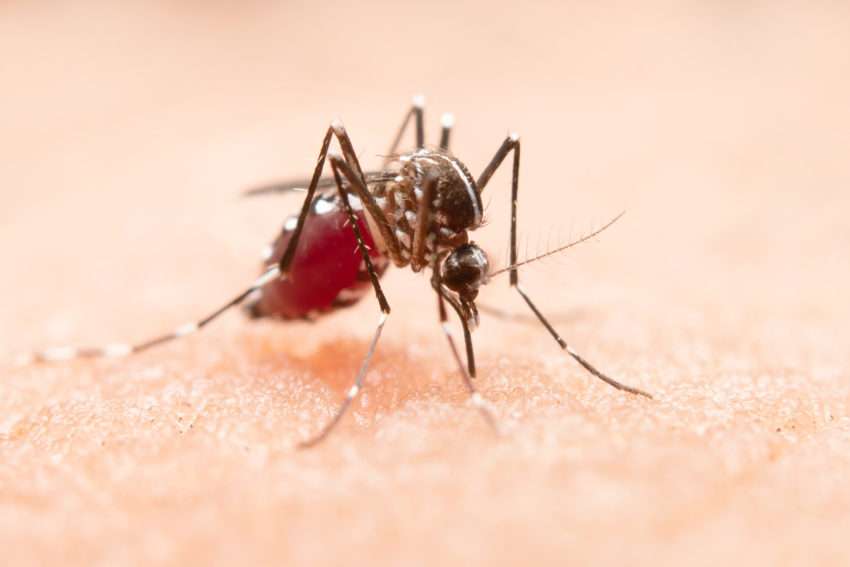
A recent study takes this a step further by using mosquito proboscises—the tiny straws female mosquitoes use to drink blood—as micro-nozzles for 3D printers. “These three printers can print structures as small as 20 microns across. A micron is a millionth of a meter or a thousandth of a millimeter. And just for reference, your skin cells are about 30 microns across,” Johnson said. He added, “These mosquito nozzles can outperform plastic or metal alternatives… and they’re also cheaper. Finally, a good use for the mosquito. Yes, finally. Getting their due.”
This technology has applications in microelectronics, tissue engineering, and biomedical research, enabling scientists to print tiny circuits and cellular scaffolds with precision previously impossible.
Comet Updates: Lemon, Swan, and Interstellar 3I/Atlas
Comet Lemon (C/2025 A6) was the easiest to spot in October but is now fading. “Right now it’s fading fast, it’s a magnitude 8… Pretty soon it’s only going to be visible down on the southern hemisphere.”
Comet Swan (C/2025 F2) disintegrated in late October, while the interstellar visitor 3I/Atlas continues to intrigue astronomers. “This did not originate, you know, close to home. It’s moving too fast and it’s moving on a path that tells us that it’s not gravitationally bound to the sun,” Johnson said. He cautioned against online speculation that it’s a spacecraft: “One of my heroes, Carl Sagan, famously said that extraordinary claims require extraordinary evidence, and I don’t think we’re at that point yet.”
For amateur astronomers, Johnson recommends checking official agency updates: “NASA and the European Space Agency and the Japanese Space Agency will be releasing all kinds of pictures of it. So, if you want to see good pictures, go check them out.”