
The jokes may be new, but the rhythm is familiar.
This weekend, the Catskills’ Borscht Belt comedy tradition returns to center stage as the Borscht Belt Fest celebrates the region that helped launch generations of American comedians, including Mel Brooks, Joan Rivers, Rodney Dangerfield and Jerry Seinfeld.
Among this year’s featured performers is comedian Harrison Greenbaum, whose fast-paced stand-up has taken him from New York comedy clubs to television appearances and international festivals. For Greenbaum, Sunday’s performance is more than another stop on the tour—it’s a homecoming to the birthplace of a style of comedy that helped shape his own career.
“I have a family history with the Catskills,” Greenbaum said. “My grandparents used to go to the Catskills in the summers. My dad was a busboy at Kutsher’s when he was 15.”
Early in his career, he worked as an intern and later a writer for MAD Magazine, where, he said, Yiddish expressions and the cadence of Jewish humor remained part of the publication’s DNA.
While comedy has evolved dramatically since the heyday of Catskills resorts, Greenbaum believes its core remains recognizable.
“The sort of style and rhythm of modern stand-up is all based in these Jewish comedians from the Catskills,” he said.
He points to comedians like Henny Youngman as representing an earlier era built around tightly crafted one-liners. Later comics, including Robert Klein, began bringing more of their personal lives into their performances.
“I think the thing that has changed is that it’s gotten even more authentic and reflective of the performer individually,” Greenbaum said.
Yet elements of classic Borscht Belt comedy endure, particularly the spontaneity between performer and audience.
He remembers advice from comedian Susie Essman that continues to shape every show: if nothing changes from one performance to the next, audiences might as well watch online instead.
“If you’re not going to interact with the audience, if you’re not going to incorporate what’s happening … then why are they coming to see you live?” Greenbaum said. “It’s a live art form. The best way to see comedy is to see it live.”
When he first moved to New York, a mentor told him it would take five years to learn comedy and another five to discover his own voice. Determined to speed up the process, Greenbaum packed his schedule with hundreds of performances.
“I think I did like six or 700 shows the first year I moved to New York,” he said. “It’s also a personal journey. So it really does take about 10 years to figure out what you’re doing.”
When Greenbaum began performing, success largely depended on landing television appearances or being selected for a comedy special. Today, comedians spend nearly as much time producing social media content as they do performing.
“You have to be a producer, an editor, a social media manager,” he said.
Still, he sees an upside.
“Never before have comedians had full control over the distribution of their material,” Greenbaum said. “They’re able to get their own audience and keep their own audience.”
His latest special was self-funded and self-released—a path that would have been far more difficult for previous generations of comedians.
As audiences navigate a period Greenbaum describes as chaotic, he believes comedy serves an increasingly important role.
“It feels like now more than ever we need to just laugh and come together,” he said. “I know I need it more than I ever have. I think the audiences do too.”
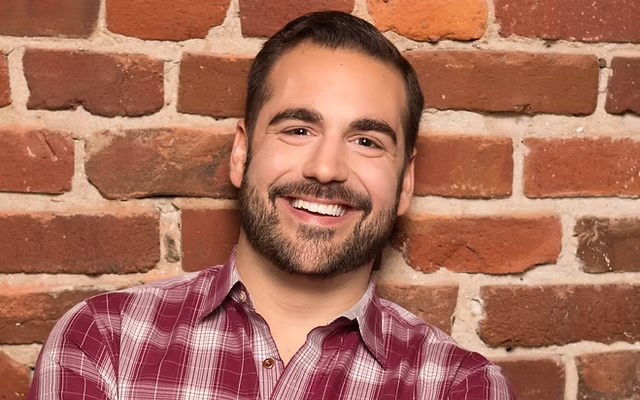
Image: Harrison Greenbaum performs Sunday at 7 p.m. as part of the Borscht Belt Fest in Ellenville. (HarrisonGreenbaum.com)